-
Chicago: 312-554-7550
-
St. Louis : 314-432-1661
-
Metro East IL : 618-346-8324
-
Central IL : 217-528-0500

Your Employees Are Already Using AI. The Question Is What They're Feeding It.
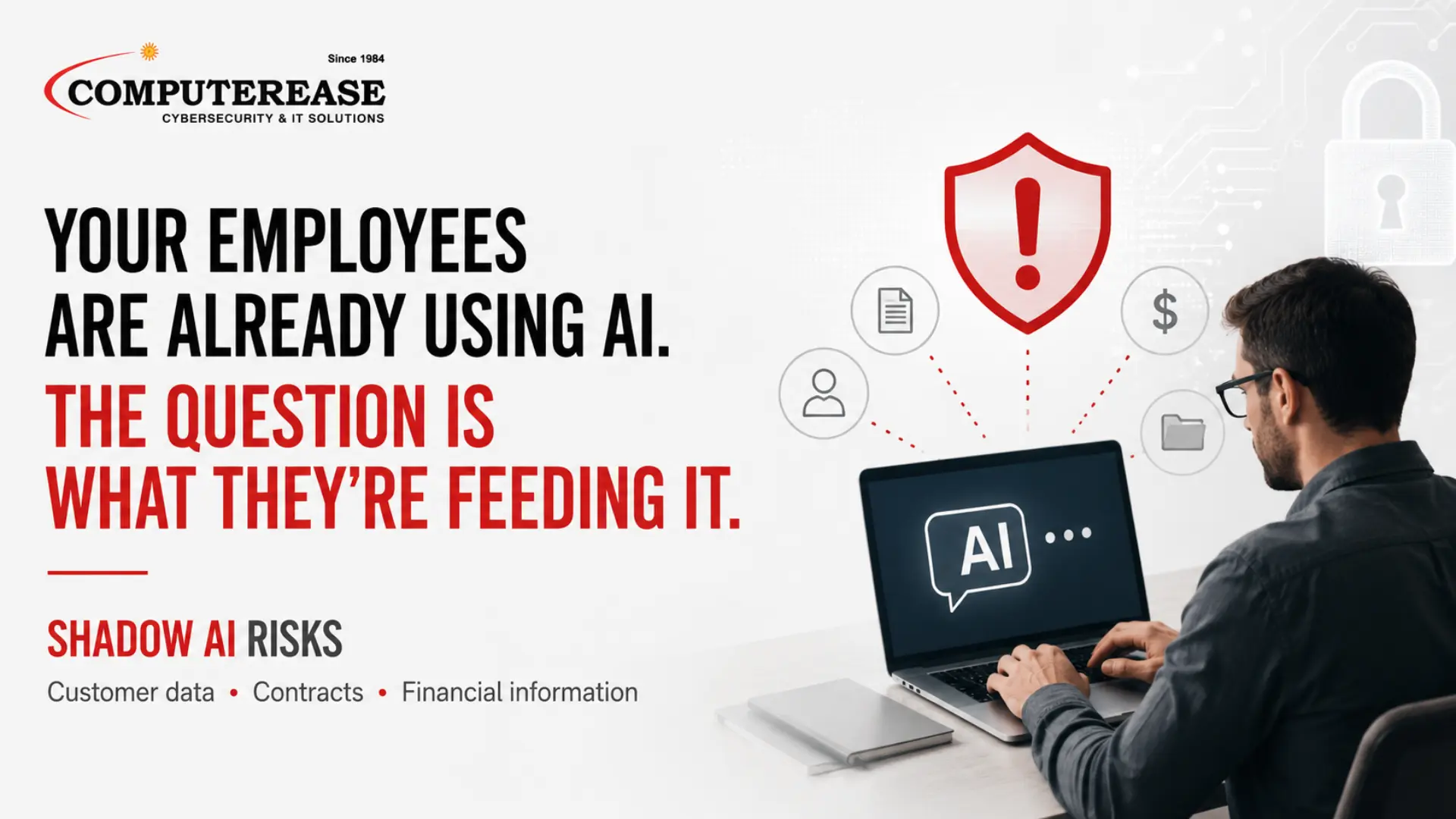
A finance employee needed to clean up a spreadsheet containing customer payment information.
Looking for a faster way to organize the file before sharing it with the team, they opened a free AI tool, pasted in the spreadsheet, and asked it to clean up the formatting.
The problem was that nobody knew the data had just been uploaded to a third-party system the company had never reviewed or approved.
No alarms went off. No alert appeared. Nothing looked broken. That is what makes Shadow AI different from many technology risks businesses have faced in the past.
Why This Is Spreading So Quickly
Most workplace technology arrives through a predictable process: someone requests it, a budget gets approved, IT reviews it, and the tool is deployed. AI doesn’t work that way.
An employee discovers a tool through a search, a LinkedIn post, or a coworker. They try it, realize it saves time, and keep using it. Before long, several employees may rely on different AI tools without leadership knowing how they are being used or what information is being shared.
The intent is usually positive. People are trying to eliminate repetitive work, move faster, and improve productivity, not create risk for the organization.
What Employees Are Actually Feeding Into AI
Most employees aren’t uploading company secrets because they are careless. They are simply using the information available to them to get their work done.
That may include customer records, financial information, contracts, employee information, proposals, project plans, meeting notes, or internal communications. Often, employees do not view it as sensitive because they work with it every day.
Once information is submitted to an unapproved AI tool, the business often loses visibility into where it goes, how it is stored, and who has access to it.
The Risks Most Businesses Don’t See
The first concern is data exposure. Information entered into consumer AI platforms may be processed, stored, or handled outside the controls your business normally applies to company data. That can leave it in places your organization cannot monitor or manage.
There is also the compliance side. Organizations handling healthcare information, payment data, financial records, or other regulated information may have obligations around how that data is stored and shared. An employee trying to save time can unintentionally create compliance issues.
Another risk receives less attention. AI systems are very good at sounding confident. They can produce professional-looking answers, summaries, and recommendations that appear accurate at first glance. When incorrect information makes its way into proposals, reports, or business decisions, the consequences often show up later and can be difficult to trace.
Why Banning AI Usually Doesn’t Work
Banning AI entirely rarely works for long. When employees find something that genuinely helps them work faster, they tend to find ways around restrictions. Instead of reducing risk, the activity often becomes harder to identify because it moves to personal accounts and unmanaged devices.
Organizations handling this successfully recognize that AI is here to stay and focus on creating clear guidelines around how it should be used.
The Businesses Getting This Right
The companies seeing the most success are not the ones banning AI. They are the ones providing employees with clear direction and realistic guardrails that support productivity without creating confusion.
That starts with an acceptable use policy explaining what information can and cannot be shared with AI tools. It should include approved platforms that meet privacy and security requirements, along with practical training that helps employees understand why certain information should remain inside the business. It should also define who employees can ask when they are unsure, because uncertainty is often where mistakes happen.
The goal is to gain the productivity benefits without exposing customer data, company information, or regulated records in the process. When expectations are clear, employees are more likely to use the right tools the right way instead of improvising on their own.
Start With A Policy Before You Need One
Most businesses already have employees using AI in some form. The question is whether they understand what information should stay inside the business and what should never be entered into an AI tool. Just as important, leadership should know which tools are being used, where they are being used, and whether those tools align with company requirements.
If you’re not sure where your organization stands, start with a conversation. A brief review of current habits, common use cases, and potential blind spots can often reveal where guidance is needed most.
We’ve developed an AI Acceptable Use Policy template that gives businesses a practical framework for using AI safely while still allowing employees to benefit from these tools.
If you’d like to learn more, schedule a 15-minute strategy call and we’ll walk through your situation, discuss where the risks typically show up, and help determine next steps for your organization.
Key Takeaway
Most businesses already have employees using AI tools. Without clear policies and approved platforms, sensitive information may be shared with third-party systems outside company’s visibility, creating security, compliance, and governance risks.