-
Chicago: 312-554-7550
-
St. Louis : 314-432-1661
-
Metro East IL : 618-346-8324
-
Central IL : 217-528-0500

How Netflix Built a Business by Solving the Right Problems
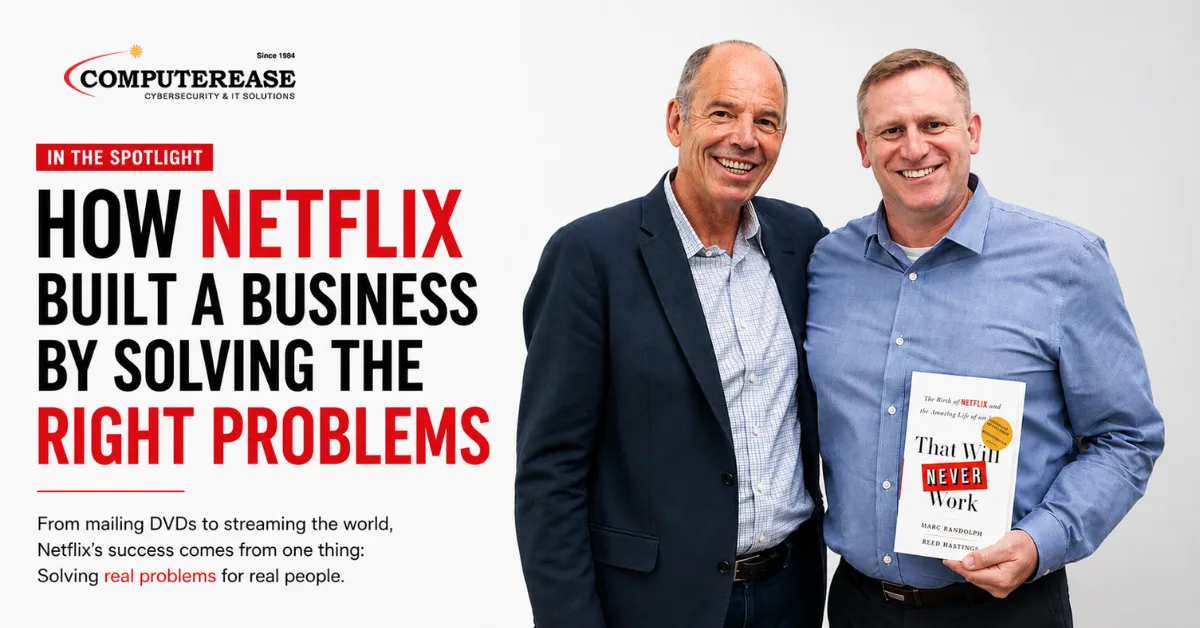
A few years ago, I had the opportunity to hear Marc Randolph speak at a conference, and what stood out wasn’t the success story most people expect when they hear the name Netflix. It was how uncertain and messy the early stages were, especially before they ever landed on the mailed DVD business model.
Randolph described long drives with Reed Hastings where the two of them would spend hours throwing out business ideas, most of which didn’t go anywhere. At the time, Amazon was starting to show what the internet could do for direct-to-consumer businesses, so they were trying to figure out how to apply that same model to something new.
Shampoo or DVDs?
They talked about customized shampoo, personalized pet food, even made-to-order surfboards, and while each one sounded interesting at first, it didn’t take long before the practical challenges became obvious, and they moved on.
At one point, the idea of renting videos by mail came up, which eventually became Netflix, but even that wasn’t treated as a breakthrough. It was just another idea in the mix, and by his own account, it felt unfinished and a little unrealistic at the time.
Real World Testing Proved It Was Possible
A great idea means nothing if it doesn’t work in the real world. It was time to test their idea. Randolph described buying a used CD, packaging it, and mailing it to Hastings’ house just to see if a disc could survive the trip. Their cheap and simple test proved that it could work.
However, their business model wasn’t perfect yet. They experimented with selling DVDs because it generated revenue more easily, even though their goal had been rentals, and internally they referred to the early version of the company as “Kibble,” a way of admitting they were still figuring out whether the idea would work at all.
They shifted to a DVD rental strategy and set themselves apart with a different model from Blockbuster and other DVD rental services. They made Netflix unique by removing due dates, introducing a monthly subscription, and allowing customers to queue the movies they wanted next. Each change addressed a problem that showed up once real people started using the service. Innovation is why they worked to launch a new DVD business model.
Being Innovative & Solving Problems
Every business that stays relevant over time goes through this same kind of evolution, whether it’s obvious or not. What works at one stage eventually reaches its limit, and the companies that continue to grow are the ones willing to adjust, refine, or completely change direction when it no longer fits.
Netflix moved from mailing DVDs to streaming and eventually into producing its own content, but each step was a response to how customers wanted to consume entertainment. The common thread wasn’t the technology itself, it was a focus on solving real problems, removing friction, and making the experience easier, which is what keeps a business aligned with how people actually use it.