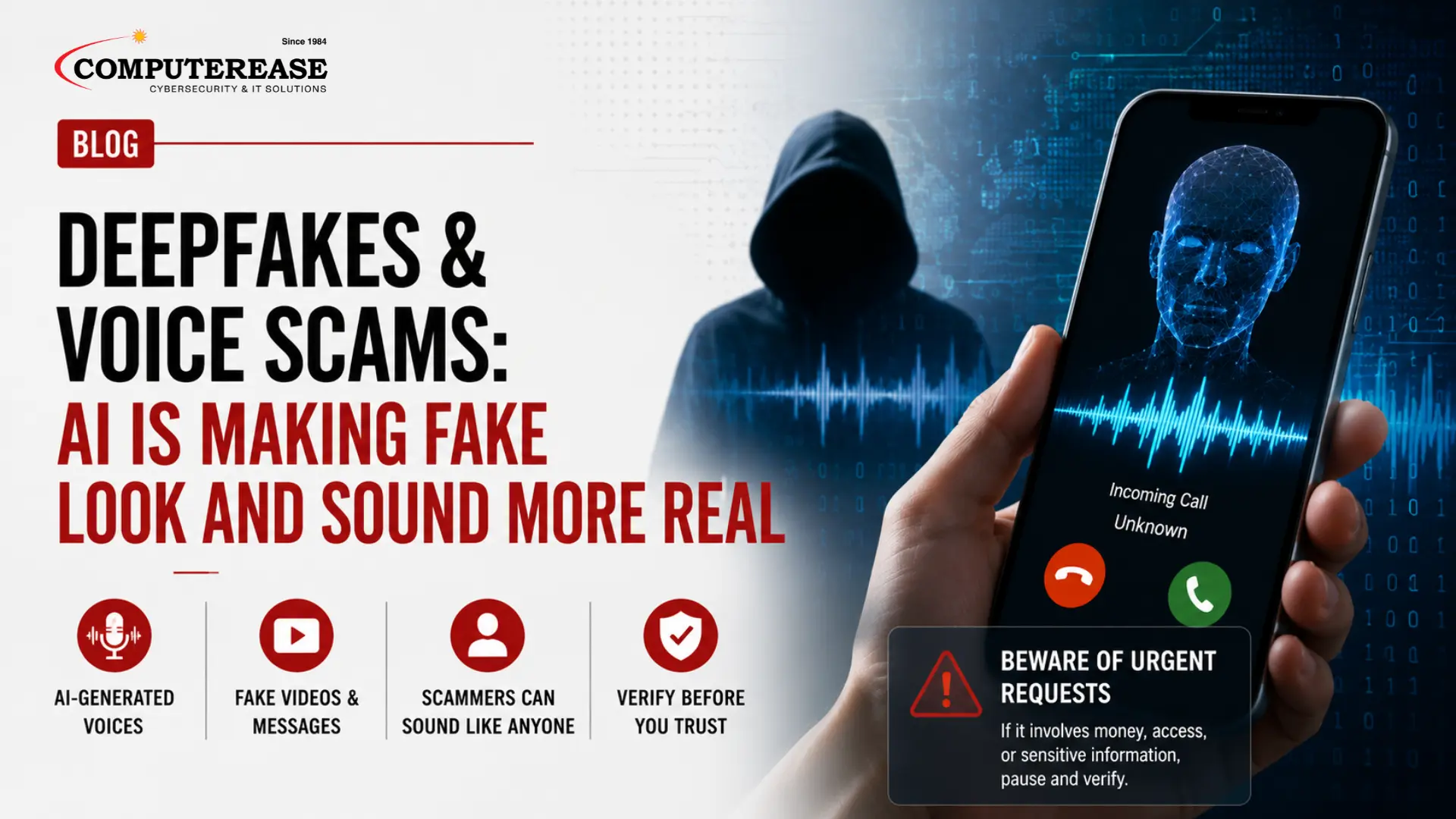
AI is making it easier for scammers to create fake voices, fake videos, and fake messages that seem surprisingly believable. In some cases, a criminal may sound like a manager, executive, coworker, or even a family member asking for urgent help, payment, login access, or confidential information.
Because these scams can sound calm, familiar, and convincing, people may lower their guard and respond too quickly. That is what makes deepfakes especially dangerous. They do not always look obviously fake anymore, and they are designed to create urgency before someone stops to verify the request.
If a message involves money, password resets, account changes, gift cards, wire transfers, or sensitive data, pause and confirm it through another communication method before taking action. A quick phone call to a known number or a direct message to a trusted contact can help prevent a costly mistake.
Key Takeaway
Deepfake voice scams use artificial intelligence to create realistic audio or video impersonations of trusted individuals. Cybercriminals use these fake messages to trick employees into sending money, sharing credentials, or revealing sensitive information. Businesses can reduce risk by verifying requests through separate communication channels and implementing strong cybersecurity controls.