-
Chicago: 312-554-7550
-
St. Louis : 314-432-1661
-
Metro East IL : 618-346-8324
-
Central IL : 217-528-0500

For Just $150, Hackers Could Drain Your Business Bank Account and Steal Your Identity
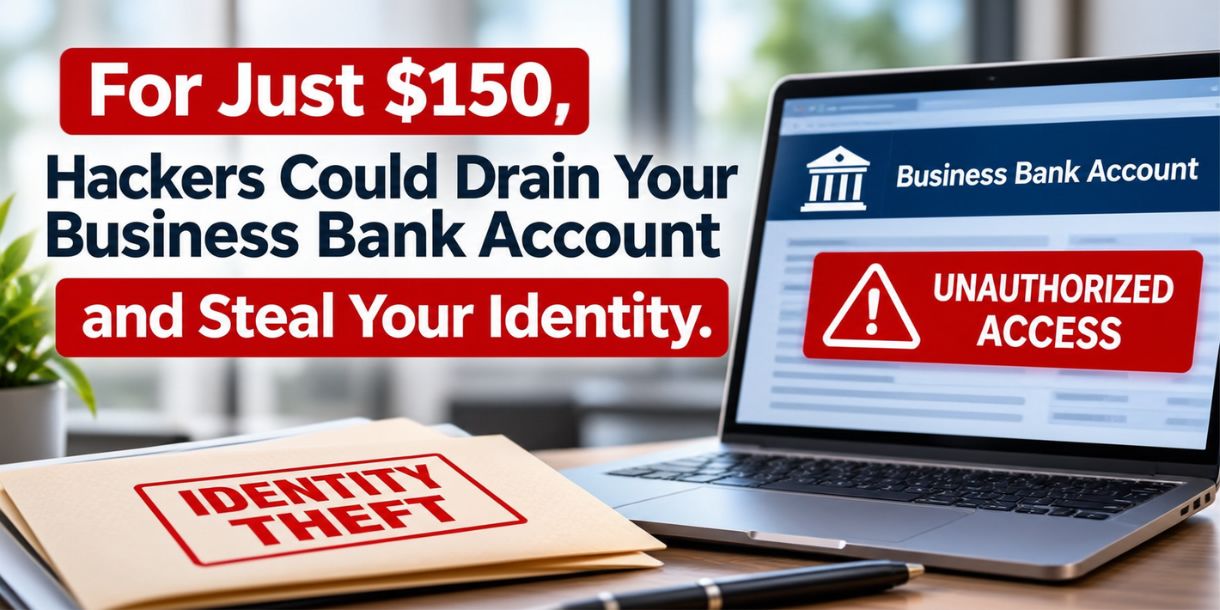
Imagine discovering that someone could purchase access to your company’s bank account information and credentials for as little as $150.
That’s a surprisingly small investment for a criminal who could potentially steal money, interfere with your company’s finances, and use your business information to commit additional fraud.
That figure comes from a recent KSDK report in St. Louis featuring fraud researcher Dr. David Maimon, who studies online marketplaces where criminals buy and sell stolen information. He explained that access to stolen business bank accounts can start around $150, with more valuable packages selling for thousands.
The price is alarming, but what concerns me more is what $150 actually buys and how much damage criminals can attempt once they have it.
What Does a Criminal Get for $150?
You might assume someone selling stolen banking information only has an account number and perhaps a password. In some cases, they’re offering considerably more.
Criminals may package login credentials with personal information about the account owner and remote access to the computer used for financial transactions.
That computer access is especially concerning. Your bank may recognize the computer your business normally uses for banking, so a login attempt from that device can raise fewer warning signs than one from an unfamiliar computer or location. It doesn’t guarantee access to the money, but it can give criminals another way to attempt fraud.
Consider everything your business handles through its financial accounts: payroll, vendor payments, transfers, and customer transactions. One compromised computer or account could put several important financial processes at risk.
A Small Purchase Can Lead to a Much Bigger Problem
The criminals purchasing this information aren’t necessarily the people who stole it.
Cybercrime has developed its own supply chain and black market. Some criminals specialize in stealing passwords or gaining access to computers. Others sell that information through online marketplaces and group chats, where buyers look for opportunities to commit fraud.
These operations involve organized groups working inside and outside the United States. The buyer doesn’t need to know how to compromise your computer if someone else has already done it.
For business owners, this changes how we need to think about cybersecurity. A criminal no longer has to spend weeks targeting your company directly. The access they need may already be available for purchase.
And once that access changes hands, you have no way of knowing how many people might attempt to use it.
The Damage Doesn’t Stop at Your Bank Balance
One of the more troubling risks is business identity theft. Criminals can use stolen company information to impersonate a legitimate business, open financial accounts, or apply for loans without the owner’s authorization.
Imagine finding out someone obtained a business loan in your company’s name. Even if you discover the fraud before significant money changes hands, you may spend considerable time working with banks, documenting what happened, and correcting financial records.
There may also be questions about what other company information was compromised and whether additional fraudulent accounts exist.
For a small business, the financial loss is only part of the damage. The time spent investigating fraud, resolving disputes, and restoring normal operations can create problems long after the original incident.
AI Can Make the Fraud More Convincing
Criminals are also using artificial intelligence to support these operations.
Researchers have observed AI-created websites designed to collect information from victims, along with fraudulent documents, images, and videos used in attempts to deceive financial institutions.
These tools make it easier to create convincing materials without spending much time or money. Employees may receive a professional-looking request that appears to come from a bank, vendor, or another trusted organization.
That’s why verifying unusual financial requests matters, even when the email, website, or documents look legitimate.
How Can You Reduce the Risk?
There are several practical precautions businesses can take, and most begin with the accounts, computers, and financial procedures already in place.
- Protect the computers used for banking. Keep them updated, use appropriate security monitoring, and restrict unnecessary remote access.
- Secure your important accounts. Enable multifactor authentication wherever available, particularly for banking, Microsoft 365, and financial applications.
- Review payment permissions. Limit who can initiate transfers, enable banking alerts, and consider requiring a second approval for significant payments.
- Verify changes to payment instructions. If a vendor requests new banking information, call a phone number already on file rather than trusting the information in the email.
- Watch for business identity theft. Investigate everything that doesn’t look legitimate.
- Train employees to pause and verify. Make sure everyone who handles payments knows how to recognize suspicious requests and feels comfortable double-checking before acting, even when a message appears to come from a bank, vendor, or coworker.
If you suspect financial fraud, contact your bank immediately. Then contact your IT provider so the computers and accounts involved can be checked and secured. The sooner you report suspicious activity, the better.
The Purchase Price Is Only the Beginning
A criminal pays $150. Your business could pay with stolen funds, fraudulent loans, and months of cleanup. Protecting your business means looking beyond passwords to the computers, email accounts, and payment procedures criminals target.
Not sure where you stand? Give us a call. We’ll help you find the security gaps before they become expensive problems.
Source: KSDK, October 7, 2026. Interview with fraud researcher Dr. David Maimon.