Most meetings do not fail during the meeting itself.
The discussion is productive. Good ideas are shared. Decisions are made. Everyone leaves feeling like progress was made.
The problem usually starts afterward.
Meeting notes get saved somewhere nobody looks again. Action items end up buried in email threads. A week later, team members have different recollections of what was decided, who was supposed to handle the next step, and when it was supposed to happen.
None of this happens because people are not paying attention. It happens because meetings generate information faster than most teams can organize it.
The Challenge Is Not Capturing Notes
Many organizations already take meeting notes. The issue is that notes alone do not create accountability.
A page full of discussion points does not tell someone what they own. It does not identify deadlines. And it does not make it easier to follow through when everyone returns to their daily workload.
What matters most after a meeting is not what was said. It is what needs to happen next.
Where AI Can Help
New AI-powered meeting tools are becoming useful because they focus on outcomes instead of documentation.
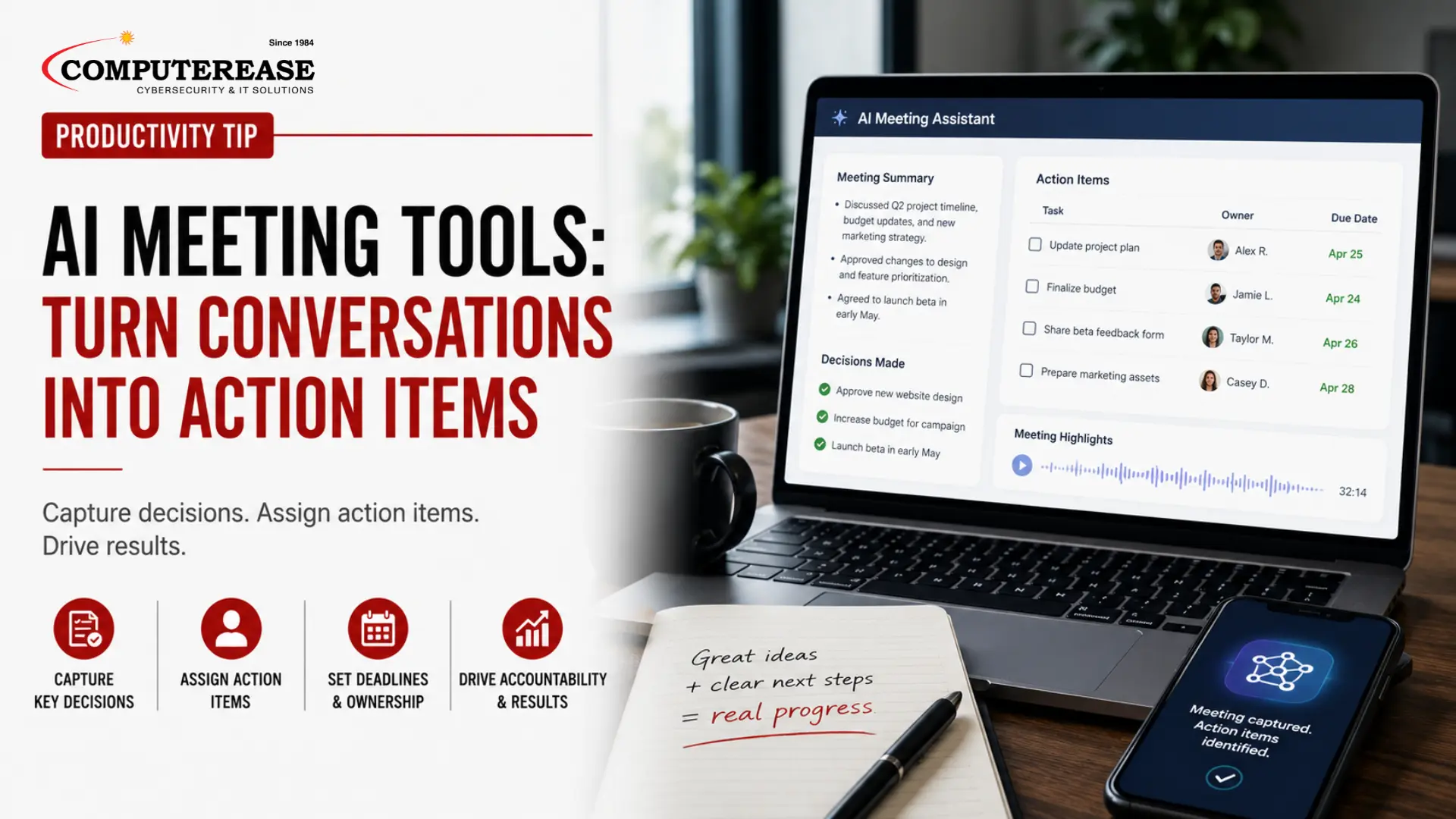
Rather than simply recording a conversation, these tools can identify decisions that were made, action items that were assigned, and follow-up tasks that need attention. In many cases, they can even summarize the meeting and organize responsibilities by person.
That creates a much clearer picture of who owns what once the meeting ends.
Ideas Only Matter When They Become Actions
Most businesses do not struggle because they lack ideas. They struggle because good ideas never consistently turn into action.
When decisions, assignments, and follow-up tasks are clearly identified and shared, meetings become more than conversations. They become a reliable way to move projects forward.
The most productive teams are not necessarily the ones holding more meetings. They are the ones that leave every meeting with a clear understanding of what happens next and who is responsible for making it happen.